

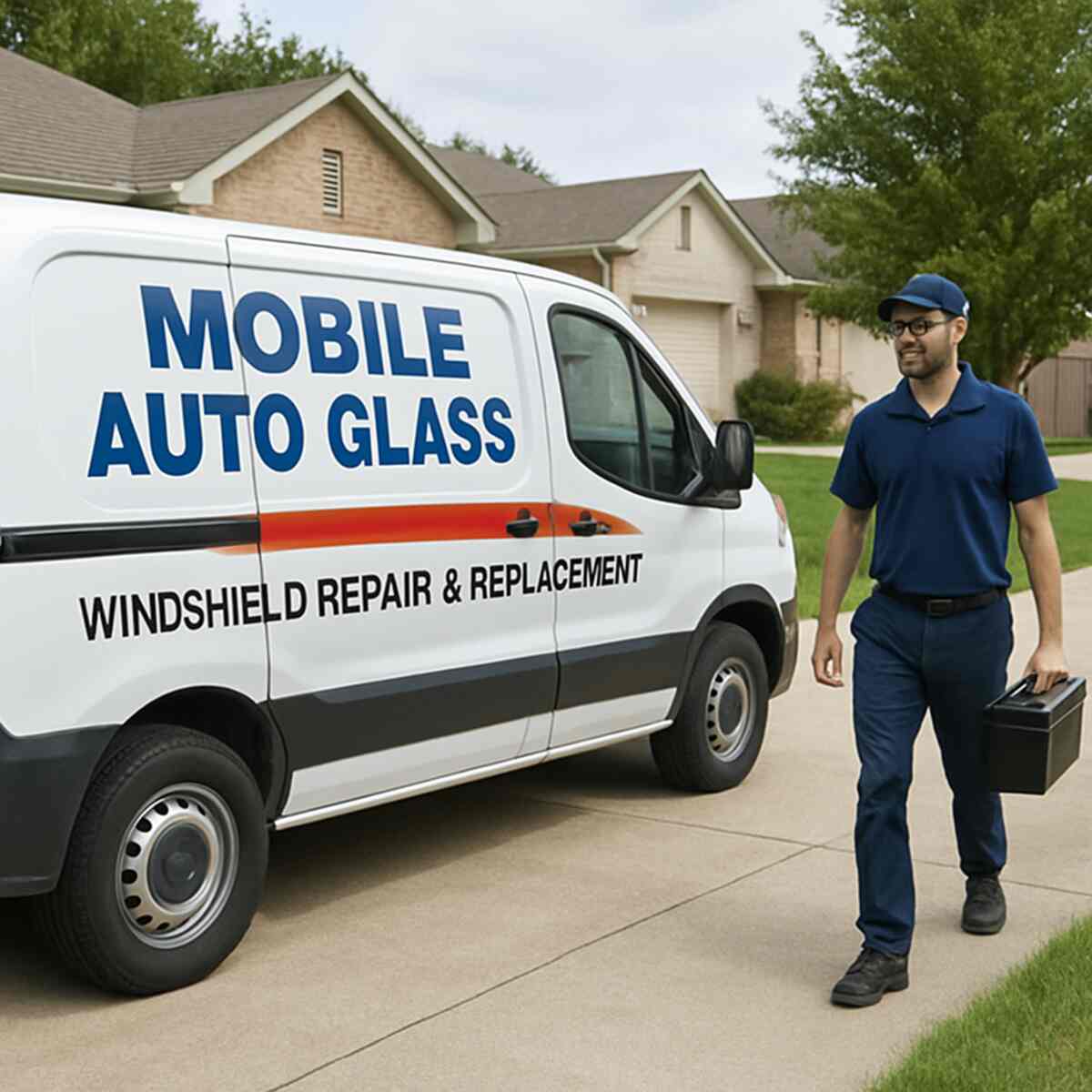
Imagine driving down the highway, enjoying your favorite playlist, when suddenly—crack! A stray rock kicked up by a passing semi-truck strikes your windshield, leaving a glaring, spider-webbed blemish directly in your line of sight. Your heart sinks. Not only is your visibility compromised, but you are now faced with the daunting logistical nightmare of getting your car to an auto glass shop. Or are you? Choose the best mobile windshield replacement.
Welcome to the modern era of automotive maintenance, where the shop comes to you. Mobile windshield replacement has revolutionized the way drivers handle vehicle glass damage, transforming a stressful, time-consuming chore into a seamless, convenient experience.
Whether you are at your office, parked in your driveway, or even at a local gym, expert technicians can now perform a complete auto glass replacement on-site. But how exactly does this process work? Is it as safe as going to a traditional shop? What goes into ensuring that your vehicle remains structurally sound and safe to drive?
In this comprehensive guide, we are going to pull back the curtain on the entire mobile glass repair and replacement industry. We will explore the science of auto glass adhesives, the integration of modern safety sensors, how to navigate insurance claims, and everything you need to know to ensure a flawless on-site installation.
What Is Mobile Windshield Replacement?
Mobile windshield replacement is a specialized service where certified technicians travel to a customer’s location to replace or repair damaged automotive glass. Rather than requiring the customer to take time out of their busy schedule to wait in a service center lobby, the technician brings a fully equipped “rolling shop” directly to the vehicle.
These service vehicles are meticulously organized and outfitted with custom glass racks, specialized cutting and extraction tools, heavy-duty suction mounts, and climate-controlled storage for industrial-grade adhesives. By leveraging advanced tools and materials, a technician performing an on-site auto glass installation can achieve the exact same factory-level seal and safety standards as they would in a brick-and-mortar facility.
The Evolution of Auto Glass Services
Decades ago, replacing a windshield was a cumbersome process that required leaving your car at a shop for a full day or even overnight. Older vehicles utilized rubber gaskets to hold the glass in place, which eventually gave way to modern urethane adhesives. As the adhesives evolved to cure faster and stronger, the necessity for a vehicle to sit stationary in a climate-controlled bay diminished. Today, advancements in automotive chemistry and mobile tool technology have made on-site service not just possible, but highly preferred by consumers.
Understanding the Anatomy of Your Windshield
To truly appreciate the replacement process, it is vital to understand what your windshield is made of. Unlike the tempered glass used in your vehicle’s side and rear windows—which is designed to shatter into thousands of blunt, harmless pebbles upon impact—your windshield is made of laminated glass.
Laminated auto glass consists of three primary layers:
- Outer Glass Layer: The exterior surface exposed to the elements.
- PVB (Polyvinyl Butyral) Interlayer: A strong, flexible, transparent plastic layer.
- Inner Glass Layer: The interior surface facing the cabin.
When an object strikes the windshield, the outer layer of glass may break, but the flexible PVB interlayer holds the shattered pieces together. This prevents dangerous glass shards from flying into the passenger cabin and keeps the structural integrity of the vehicle intact.
Identifying Types of Automotive Glass Damage
Not all glass damage is created equal. The severity, shape, and location of the impact dictate how the glass will behave and what kind of service is required. Here are the most common types of automotive glass damage:
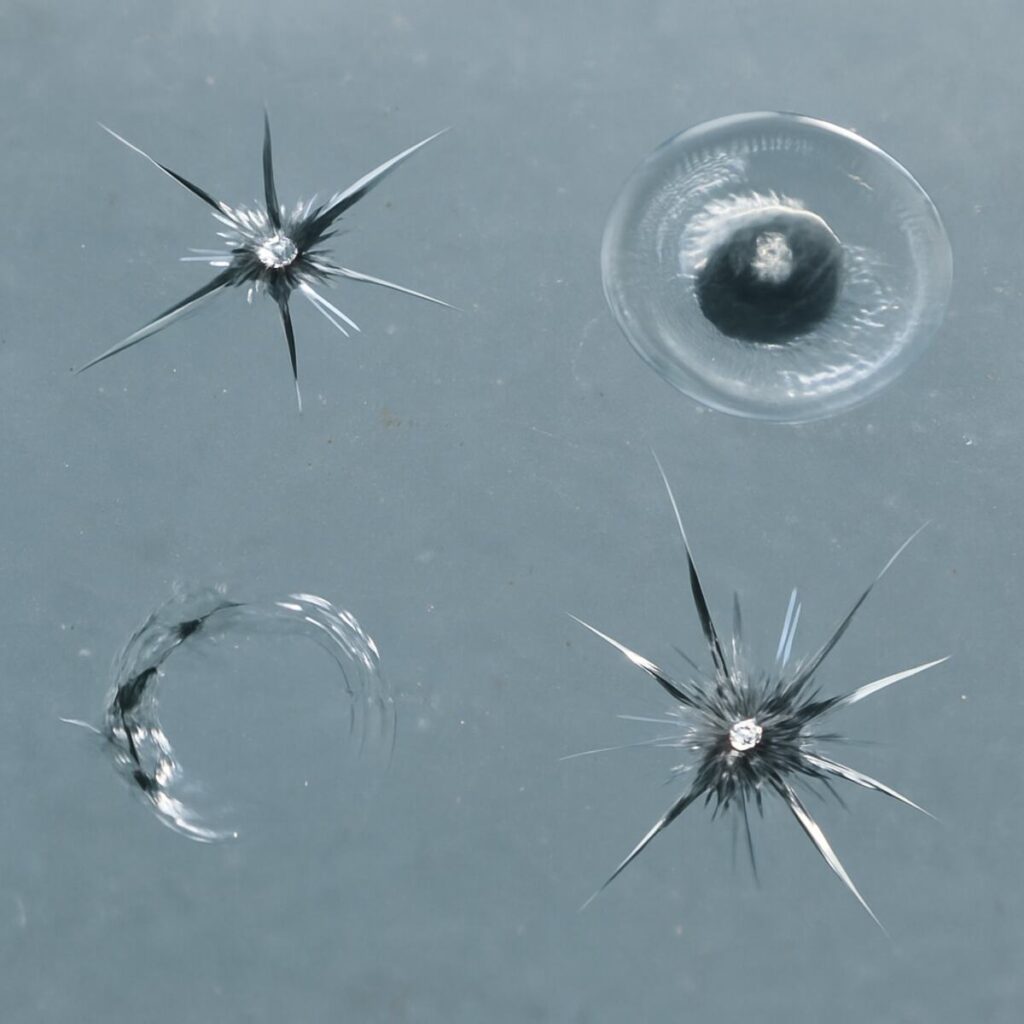
- Bullseye: A circular break with a distinct cone in the outer layer of the glass, resembling a dartboard’s bullseye. These are generally easy to repair if caught early.
- Star Break: A series of short cracks radiating outward from the point of impact. Star breaks are notorious for spreading rapidly when subjected to temperature changes.
- Half-Moon (Partial Bullseye): A semi-circular fracture that lacks a complete ring.
- Combination Break: A severe impact that features characteristics of both a bullseye and a star break, often resulting in missing chunks of outer glass.
- Edge Crack: A crack that starts within two inches of the edge of the windshield. Because the edges of the windshield endure the most structural stress, edge cracks almost always require a full replacement.
- Stress Crack: A crack that occurs without a physical impact, typically caused by extreme and sudden temperature fluctuations (e.g., pouring boiling water on a frozen windshield).
The Great Debate: Windshield Chip Repair vs Full Replacement
When you notice a blemish on your glass, your first question will likely be: Can this be fixed, or do I need a whole new windshield?
Understanding the parameters of windshield chip repair vs full replacement is crucial for both your safety and your wallet. Mobile technicians are equipped to handle both, but strict industry guidelines dictate which path to take.
When to Opt for Mobile Chip Repair
Repairing a chip is faster, cheaper, and more environmentally friendly, as it keeps the original factory seal intact and prevents non-recyclable laminated glass from entering a landfill. A mobile technician can usually perform a repair if:
- The chip is smaller than a quarter (about 1 inch in diameter).
- The damage is restricted strictly to the outer layer of glass.
- There are three or fewer chips on the entire windshield.
- The damage is not in the driver’s primary line of sight (the area covered by the driver-side wiper blade).
How Mobile Repair Works: The technician uses a specialized vacuum bridge tool to remove air and moisture from the damaged area. They then inject a high-quality, optically clear acrylic resin into the void. Once the resin is cured using a UV light, the surface is polished flat. While the blemish won’t disappear completely, the structural integrity of the glass is restored, preventing the crack from spreading.
When Full Replacement is Mandatory
If the damage exceeds the safety limits for repair, a full auto glass replacement is required. You must replace the windshield if:
- The crack is longer than a dollar bill (approximately 6 inches).
- The crack intersects with the edge of the windshield.
- The damage penetrates both the outer and inner layers of glass.
- The impact has damaged the internal PVB interlayer.
- The damage sits directly in the driver’s line of vision, where even a successful repair could cause a distracting optical distortion.
Choosing Your Glass: Original Equipment Manufacturer vs Aftermarket Glass
Once you determine that a full replacement is necessary, you are faced with a choice regarding the type of glass to be installed. The debate between original equipment manufacturer vs aftermarket glass is one of the most common discussions between vehicle owners and auto glass technicians.
1. OEM (Original Equipment Manufacturer) Glass
OEM glass is fabricated by the same manufacturer that produced the original glass for your specific vehicle make and model (e.g., Pilkington, PGW, Sekurit).
- Pros: It matches the original windshield’s exact specifications, thickness, tint, durability, and acoustic properties. It will often feature the vehicle maker’s logo (e.g., the Ford or Honda emblem) printed on the glass.
- Cons: OEM glass is significantly more expensive. Depending on your insurance policy, your provider may only cover the cost of aftermarket glass unless you pay the difference or have an OEM endorsement on your policy.
2. OEE (Original Equipment Equivalent) Glass
OEE glass is made by manufacturers who produce OEM glass, but it is manufactured for a vehicle they do not hold the original contract for. It is made to the exact same safety and quality standards as OEM but lacks the vehicle manufacturer’s branded logo.
3. Aftermarket Glass
Aftermarket glass is manufactured by auto glass companies that do not have contracts with car manufacturers. While the glass must legally meet minimum Department of Transportation (DOT) safety standards, the proprietary technology (such as specific acoustic dampening layers or solar coatings) might differ slightly from the original.
- Pros: It is highly cost-effective and is usually fully covered by standard auto glass insurance claims.
- Cons: Fit and finish can sometimes vary by a millimeter or two. In highly advanced modern vehicles with complex sensors, inferior aftermarket glass can occasionally cause issues with camera clarity.
Which should you choose? If you drive a newer vehicle heavily reliant on Advanced Driver Assistance Systems (ADAS), OEM or high-quality OEE glass is strongly recommended to ensure proper sensor functionality. A reputable mobile glass provider will walk you through your options and help you make the best choice for your vehicle.
The Mobile Windshield Replacement Process: Step-by-Step
Having a technician replace a structural component of your vehicle in your office parking lot might seem like magic, but it is the result of rigorous training, specialized tools, and precise execution. Here is exactly what happens during a mobile auto glass replacement.
Step 1: Pre-Installation Inspection and Vehicle Protection
When the technician arrives, their first step is a thorough pre-inspection. They will check the vehicle for any pre-existing scratches on the bodywork or dashboard and ensure the replacement glass they brought matches the specifications of your vehicle perfectly.
Next comes protection. The technician will drape heavy-duty protective towels or specialty automotive covers over your hood, fenders, steering wheel, and front seats. This ensures that no debris, sharp tools, or chemical adhesives accidentally damage your car’s interior or exterior paint.
Step 2: Removing the Wiper Blades and Cowl
The windshield is anchored deep within the frame of the vehicle. To access the bottom edge of the glass, the technician must carefully remove the windshield wiper arms and the plastic cowling (the protective trim at the base of the windshield).
Step 3: Cutting Out the Damaged Glass
The old windshield is held in place by a thick, incredibly strong bead of hardened polyurethane adhesive. Removing the glass requires cutting through this tough seal.
Technicians use a variety of specialized tools for this, such as cold knives, power extractors, or advanced wire-cutting systems (like the Spider or WRD Glass removal tools). The wire-cutting system is highly favored in modern mobile applications; a high-tensile wire is threaded through the urethane and cranked around the perimeter of the glass on a specialized pulley, slicing cleanly through the adhesive without risking any scratches to the vehicle’s metal pinch weld (the frame where the glass sits).
Step 4: Preparing the Pinch Weld
Once the old glass is lifted away, the technician is left with the pinch weld, which is still coated in the old urethane. The technician cannot simply apply new glue over a thick layer of old glue. They must “trim” the old urethane bead down to a uniform, paper-thin layer (about 1-2 millimeters thick). This acts as a bonding base for the new adhesive.
If there is any rust on the pinch weld, or if the metal was scratched during a previous faulty installation, the technician will sand the area and apply a specialized anti-corrosion primer. Mobile auto glass safety standards strictly dictate that any bare metal must be primed; otherwise, rust will form under the new seal, eventually causing water leaks and compromising the adhesive bond.
Step 5: Prepping the New Windshield
The new windshield is thoroughly cleaned with industrial glass cleaner to remove any manufacturing residues, fingerprints, or dust. The technician then applies a specialized glass prep fluid and a chemical primer to the black ceramic band (the frit) around the edge of the glass. This primer acts as a chemical bridge, ensuring the new urethane adheres permanently to the glass.
Step 6: Urethane Application
This is the most critical step of the entire process. The technician uses an electric or battery-operated caulking gun to apply a continuous, precise “V-shaped” bead of high-grade automotive urethane around the perimeter of the glass (or directly onto the pinch weld, depending on the vehicle). The V-shape is crucial because when the glass is pressed into place, the tip of the V collapses, spreading the adhesive evenly without leaving any air pockets.
Step 7: Setting the Glass
Given the weight and awkward size of a windshield, setting it precisely requires immense skill. Many modern mobile technicians use specialized lifting tools with heavy-duty suction cups or articulated arms attached to the side window to help swing the heavy glass smoothly into perfect alignment. Once set, they gently press the perimeter to ensure full contact with the urethane bead.
Step 8: Reassembly and Clean-Up
Finally, the technician reinstalls the cowl panel, reattaches the wiper blades, and removes all protective drapes. They will vacuum any debris that may have fallen into the cabin and clean the new windshield until it is sparkling.
The Science of Safety: Urethane Adhesive Curing Stages
One of the most frequent questions customers ask after an on-site installation is: “How soon can I drive my car?”
The answer lies in the complex chemistry of automotive adhesives. Unlike typical household glues that dry through evaporation, windshield urethane is a moisture-curing polyurethane. It relies on the humidity in the air to trigger a chemical reaction called cross-linking, which transforms the paste into a dense, incredibly strong rubber.
Understanding the urethane adhesive curing stages is vital for your safety:
- Application (Wet Stage): The urethane is viscous and pliable, allowing the technician to position the glass perfectly.
- Skinning Over: Within 10 to 15 minutes, the outer layer of the urethane begins to form a skin.
- Green Strength: As cross-linking begins, the adhesive builds “green strength.” This means it is strong enough to hold the glass firmly in place while the vehicle is stationary, but it cannot yet withstand the massive kinetic forces of driving, hitting potholes, or deploying an airbag.
- Safe Drive-Away Time (SDAT): This is the precise moment when the urethane has cured deeply enough to meet Federal Motor Vehicle Safety Standards (FMVSS). At this stage, the adhesive is strong enough to hold the windshield in place during a collision or rollover, and strong enough to act as a backboard if the passenger-side airbag deploys.
- Full Cure: It typically takes between 24 and 72 hours for the urethane to completely cure all the way through to its core, depending on temperature and humidity.
What is the Safe Drive-Away Time After Installation?
For most modern, high-quality urethanes used by premium mobile services, the safe drive-away time after installation is remarkably short—typically between 30 minutes to 1 hour.
Your technician will inform you of your specific SDAT based on the exact adhesive they used and the current weather conditions. It is imperative that you do not drive the vehicle before this time has elapsed. Driving prematurely can cause the glass to shift, resulting in dangerous wind noise, water leaks, or worse—a complete failure of the bond in the event of an accident.
Overcoming the Elements: Weather Conditions for Mobile Glass Repair
Because mobile windshield replacement takes place outdoors, Mother Nature plays a significant role in the viability of the service. Auto glass technicians are well-trained to navigate various climates, but certain weather conditions for mobile glass repair must be taken into consideration.
Rain and Precipitation
Water is the enemy of an uncured windshield installation. If rain gets onto the pinch weld or mixes with the uncured urethane, it can severely compromise the chemical bond, leading to a high risk of future leaks and structural failure.
- The Solution: If it is raining, the mobile technician will require adequate cover to perform the replacement safely. This could be a garage, a sturdy carport, or an underground parking deck. If no cover is available, the appointment must be rescheduled. Many mobile vans are equipped with specialized pop-up canopies, but these are generally only effective for light drizzle, not heavy storms.
Extreme Cold
Urethane requires moisture and heat to cure. In freezing temperatures, the chemical cross-linking process slows down dramatically.
- The Solution: In cold climates, technicians use specialized cold-weather urethanes designed to cure at temperatures as low as 0°F (-18°C). However, the safe drive-away time will likely be extended. Mobile techs may also use portable heaters to warm the vehicle’s cabin and the pinch weld to facilitate proper curing.
Extreme Heat and Humidity
Conversely, high heat and oppressive humidity can cause the urethane to “flash” or cure too rapidly. If the adhesive skins over before the technician can properly set the glass, the bond will be compromised.
- The Solution: In hot climates, technicians use specialized hot-weather adhesives with a longer working time. They will often try to park the vehicle in the shade and work swiftly to ensure the glass is set before the chemical reaction takes hold.
Preparing Your Car for Mobile Glass Service
To ensure a smooth, efficient, and successful appointment, a little bit of preparation goes a long way. Preparing your car for mobile glass service is simple and highly appreciated by your technician. Here is a quick checklist:
- Find a Safe, Flat Location: The technician needs space to work safely. Park your vehicle on a flat, solid surface (like a driveway or level parking lot). Ensure there is at least 3 to 4 feet of clearance on both sides and the front of the vehicle so the technician can maneuver the heavy glass and open their van doors.
- Clear the Dashboard: Remove any radar detectors, dash cams, parking passes, or loose change from your dashboard. The technician needs clear access to the base of the windshield.
- Remove Interior Clutter: The technician will need to access the front seats to remove the rearview mirror, unclip sensor wiring, and inspect the inside of the glass. Make sure the front cabin is clean and free of excessive clutter.
- Provide Keys: The technician will need the keys to turn on the ignition (without starting the engine) to test the windshield wipers, roll down the windows (to prevent air pressure spikes when closing the doors later), and test any electronic sensors attached to the glass.
- Secure Pets and Children: While watching a mobile glass replacement can be fascinating, an active work zone involves sharp tools, heavy glass, and industrial chemicals. Keep pets and young children at a safe distance.
The Rise of Smart Windshields: Recalibrating ADAS Cameras After Glass Service
Perhaps the most significant shift in the auto glass industry over the last decade has been the introduction of Advanced Driver Assistance Systems (ADAS). Your windshield is no longer just a piece of curved glass protecting you from the wind; it is a highly sophisticated electronic hub.
Most modern vehicles are equipped with a forward-facing camera mounted on the windshield, usually housed behind the rearview mirror. This camera is the “eyes” for critical safety features, including:
- Lane Departure Warning and Lane Keep Assist
- Forward Collision Alert
- Automatic Emergency Braking
- Adaptive Cruise Control
- Pedestrian Detection
When a windshield is replaced, this camera must be disconnected and removed. Even if the technician reinstalls the camera onto the new windshield with microscopic precision, the new glass’s slight variations in curvature, thickness, or light refraction can alter the camera’s sightline.
A camera that is off by just one millimeter at the windshield can be “blind” by several feet at a distance of 150 feet down the road. This could result in your car braking too late for an obstacle or steering you out of your lane.
Therefore, recalibrating ADAS cameras after glass service is not just an optional add-on; it is a strict, mandatory safety requirement.
Can Mobile Technicians Perform ADAS Recalibration On-Site?
Yes. The mobile auto glass industry has evolved rapidly to meet this technological demand. Today, premium mobile glass providers carry sophisticated computer diagnostic tools to perform recalibrations right in your driveway. There are two main types of recalibration:
- Dynamic Recalibration: The technician plugs an OBD-II diagnostic scanner into your vehicle’s computer. They then drive the vehicle at a specified speed on well-marked, straight roads for a set duration. The vehicle’s computer uses the clear road lines and surrounding traffic to “re-learn” its center point.
- Static Recalibration: This requires the vehicle to remain stationary on a perfectly level surface. The technician sets up highly precise, laser-aligned target boards at specific distances in front of the vehicle. The camera reads these targets to calibrate its positioning. (Note: Static recalibration requires precise environmental conditions. If your driveway is heavily sloped or the sun is glaring directly into the camera, a mobile static recalibration might not be possible, and the vehicle may need to be taken to an in-shop controlled environment).
Always confirm with your service provider when searching for “windshield replacement near me” that they have the capability and certification to perform ADAS recalibration on your specific vehicle make and model.
Cost and Insurance: Navigating the Financials
A sudden windshield break is an unexpected expense. Understanding the financial dynamics of the repair can help alleviate the stress. Many consumers wonder about the cost of mobile vs in-shop glass service.
Historically, mobile service carried a hefty “convenience fee.” However, the industry has become so competitive, and mobile fleets have become so efficient, that the cost difference today is often negligible—and in many cases, completely non-existent. The price of your replacement is dictated almost entirely by the make and model of your vehicle, the type of glass required (OEM vs Aftermarket), and the necessity of ADAS recalibration.
On average, a standard windshield replacement without ADAS can range from $250 to $400. However, for a luxury vehicle requiring OEM glass and complex static recalibration, the bill can easily exceed $1,000 to $1,500.
Does Insurance Cover Mobile Glass Repair?
The short answer is: Yes, overwhelmingly so.
Comprehensive auto insurance policies almost universally cover auto glass repair and replacement, and major insurance carriers explicitly support and encourage mobile services. In fact, many insurance companies have direct billing networks integrated with reputable mobile glass shops, meaning you won’t even have to fill out complex claim forms; the glass company handles the paperwork for you.
Understanding Your Deductible for Auto Glass Insurance Claims
How much you will actually pay out of pocket depends on your specific insurance policy and the state in which you reside.
- Chip Repair: If you are getting a mobile windshield chip repair rather than a full replacement, nearly all insurance companies will waive the deductible entirely. They would much rather pay $75 for a mobile repair today than $800 for a full replacement tomorrow. It is completely free to you.
- Full Replacement with Standard Deductibles: If you require a full replacement, you will typically be responsible for paying your comprehensive deductible (usually $250 or $500), and the insurance company will cover the rest.
- Zero-Deductible Auto Glass States: Certain states have laws mandating that insurance companies offer “full glass coverage” without requiring the policyholder to pay a deductible. If you live in a state like Florida, South Carolina, or Kentucky, and you carry comprehensive insurance, your deductible for auto glass insurance claims is legally required to be waived. You pay nothing out of pocket for the entire mobile replacement.
- Optional Glass Endorsements: In other states, you may have had the option to add a specific “glass buyback” or “glass endorsement” to your policy for a few extra dollars a month, which lowers or eliminates your glass deductible.
Always check your insurance policy or consult with your mobile auto glass provider—they deal with these claims daily and can instantly look up your coverage limits.
Finding the Right Technician and Service Provider
Because the windshield is a critical structural component of your vehicle, you shouldn’t trust the installation to just anyone with a van and a suction cup. When you begin searching for “windshield replacement near me,” you must know how to vet the companies that populate your search results.
Mobile Auto Glass Safety Standards
The industry is governed by strict regulations to protect consumers. The Federal Motor Vehicle Safety Standards (FMVSS) outline the performance requirements for windshield retention (FMVSS 212) and roof crush resistance (FMVSS 216).
During a front-end collision, your windshield acts as a structural backstop for the passenger-side airbag. If the airbag deploys at 200 mph and strikes a poorly installed windshield, the glass will blow out of the frame. The airbag will deploy out the front of the car rather than protecting the passenger. Furthermore, the windshield accounts for up to 45% of the cabin’s structural integrity in a rollover accident, preventing the roof from collapsing.
To ensure these safety standards are met, the Auto Glass Safety Council (AGSC) created the ANSI/AGSC/AGRSS standard—the industry’s strict, comprehensive guideline for proper auto glass installation.
Look for Professional Auto Glass Technician Certifications
When selecting a mobile service, inquire about their technicians’ qualifications. Professional auto glass technician certifications are the gold standard of reliability. Look for technicians who are certified by:
- AGSC (Auto Glass Safety Council): Ensures the technician has passed rigorous testing on safety standards, adhesive chemistry, and modern installation techniques.
- NGA (National Glass Association): A legacy certification denoting high-level mastery of the trade.
- Adhesive Manufacturer Certifications: Top-tier technicians undergo specific training from chemical manufacturers (like Sika, Dow, or SRP) to fully understand the curing properties and application requirements of the exact urethane they are using.
The Importance of a Lifetime Warranty on Auto Glass Workmanship
A reputable mobile auto glass provider will stand behind their work long after the van pulls out of your driveway. You should exclusively hire a company that offers a robust lifetime warranty on auto glass workmanship.
What does a high-quality warranty cover?
- Air Leaks: If you hear a whistling sound at highway speeds after an installation, it means there is a gap in the urethane.
- Water Leaks: If water drips down the inside of your glass during a rainstorm or carwash.
- Manufacturer Defects: Such as optical distortion (wavy glass) in the driver’s line of sight, or delamination (where the glass separates from the internal PVB layer).
- Stress Cracks: A crack that forms from the edge of the glass with no visible point of impact, usually indicating a flaw in the glass manufacturing or an uneven pinch weld installation.
Note: Warranties do not cover new damage. If a rock hits your new windshield a week after it is installed, that is a new insurance claim, not a warranty issue.
Actionable Tips for Maintaining Your New Windshield
Once the mobile technician has successfully replaced your glass, packed up their tools, and handed you back your keys, it is up to you to protect the investment. Following the safe drive-away time is just the first step. Here are actionable tips to ensure your new windshield cures perfectly and lasts for years:
- Leave the Retention Tape On: Technicians often place strips of blue retention tape at the top corners of the windshield. This tape prevents the heavy glass from slipping downward while the urethane achieves its green strength. Leave this tape on for at least 24 hours. When removing it, peel it back slowly; do not pull straight up.
- Avoid Slamming Doors: When the urethane is curing, the cabin of your car is essentially airtight. Slamming a car door creates a sudden spike in cabin air pressure. This pressure will seek the path of least resistance to escape, which is often right through the soft, curing urethane bead, causing a permanent air leak. For the first 24 hours, roll down a window slightly before closing your doors.
- Skip the High-Pressure Car Wash: While normal rain will not affect a newly cured windshield (after the SDAT has passed), the intense, high-powered jets of a commercial car wash can aggressively push water through a curing seal. Wait at least 48 to 72 hours before taking your vehicle through a mechanical car wash.
- Inspect Your Wiper Blades: A new windshield is pristine and smooth. Old, cracked, or hardened rubber wiper blades can immediately scratch the new glass. It is highly recommended to have the mobile technician install a fresh set of wiper blades during the replacement process.
- Be Mindful of Temperature Shocks: Avoid blasting the defroster on maximum heat immediately on a freezing morning, or blasting the AC onto a sun-baked dashboard. Gradual temperature changes prevent unnecessary stress on the new installation.
Conclusion
A shattered windshield no longer dictates a ruined schedule or a massive logistical headache. The advent of mobile windshield replacement has brought the expertise, technology, and safety of a professional auto glass shop directly to your doorstep.
By understanding the intricacies of the installation process—from the delicate urethane adhesive curing stages to the mandatory necessity of recalibrating ADAS cameras after glass service—you empower yourself as a consumer. You now know what to look for when evaluating an on-site auto glass installation, the importance of verifying professional auto glass technician certifications, and how to navigate deductible for auto glass insurance claims with confidence.
The next time a stray rock cracks your glass, don’t panic. Reach out to a certified, highly rated mobile auto glass specialist in your area. They will arrive equipped with state-of-the-art tools, high-quality materials, and the specialized knowledge required to restore your vehicle’s safety and structural integrity—all without you ever having to leave the comfort of your home or office.
Safe travels, and enjoy the clear view ahead!