

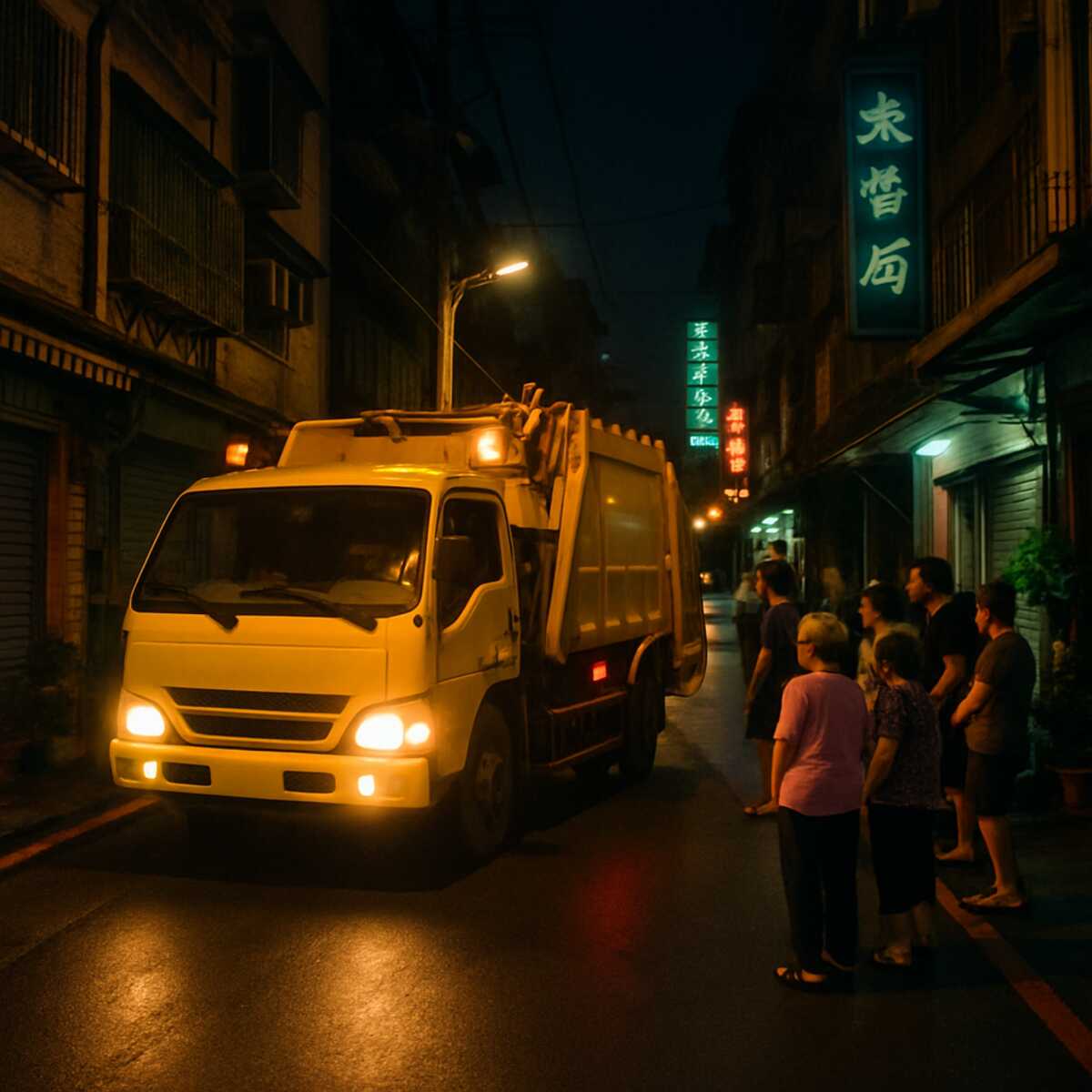
In most neighborhoods around the world, the twinkling melody of Beethoven’s Für Elise brings children running for ice cream. Across Taiwan, however, this classical tune signals a completely different kind of nightly ritual: the arrival of the local sanitation fleets. Thirty years ago, international environmentalists widely referred to the territory as “Garbage Island” due to its overflowing landfills and mounting pollution. Today, official government data reveals that the island boasts one of the highest resource recovery rates globally. This dramatic transformation didn’t happen through invisible industrial processes but through a radical reimagining of how ordinary citizens handle their daily household refuse. Read the Best info about phân loại rác ở đài loan.
At the heart of this success is a strict cultural and legal framework officially known as the “No Dirt on the Ground” policy. Instead of passively tossing bags onto the curb for anonymous pickup, residents must personally hand their items to the sanitation workers. According to municipal waste authorities, this direct-handoff approach eliminates the pest problems and street clutter that plague many major global cities. As a result, Taiwan’s waste management operates more like a community social appointment than a mere civic service. Neighbors gather on street corners chatting and waiting together, turning a mundane chore into a nightly point of national pride.
Mastering waste sorting in Taiwan is the key to participating in this daily miracle. To avoid fines and fit into the rhythm of the city, newcomers only need to know three main destinations for their items. General waste goes into specific pre-paid city bags destined for the incinerator, recyclables are handed off to be manufactured into new goods, and food scraps are collected separately to feed local pigs or create compost. By checking your local yellow garbage truck’s music schedule, you can easily find your neighborhood’s designated meeting time and step confidently into your new role as an active participant in a circular economy.
From ‘Garbage Island’ to Global Leader: The 30-Year Transformation
Thirty years ago, Taiwan was saddled with an unenviable nickname: “Garbage Island.” A booming economy had brought rising consumerism, but without proper infrastructure, trash piled up on street corners and illegal dumps regularly caught fire. Today, the streets are remarkably pristine, and the island boasts a recycling rate of around 55 percent, matching leading countries like Germany and far surpassing the global average of just 19 percent. This transformation wasn’t the result of a sudden technological miracle, but rather a profound shift in daily habits that turned a national crisis into a point of global pride.
The catalyst for this radical change was a simple, unforgiving geographic reality. Roughly two-thirds of the island is covered by rugged mountains, leaving very little flat terrain for its 23 million residents to live on, let alone space to bury their refuse. By the mid-1990s, existing landfills were overflowing, and communities began fiercely protesting the construction of new incinerators in their backyards. With nowhere left to hide the mounting debris, the public realized that burying the problem was no longer physically possible.
Faced with this spatial dead end, citizen-led environmental groups pushed for a complete overhaul of Taiwan’s waste management policies. The historical pivot point arrived in 1997 with the launch of the Four-in-One Resource Recovery Program. Instead of just asking people to throw things away, this initiative forged a powerful alliance between community residents, local recycling businesses, municipal collection teams, and a state-managed recycling fund. By holding manufacturers financially responsible for the packaging they produced, Taiwan laid the essential groundwork for a true circular economy, where a discarded plastic bento box is treated as a valuable raw material rather than useless refuse.
Participating in this system today means stepping into a decades-long legacy of civic cooperation. What began as widespread public protests has evolved into a well-choreographed neighborhood routine that keeps the island clean. To ensure everyone actively reduces their environmental footprint rather than just sorting it, local governments introduced a clever financial incentive.
The Pay-As-You-Throw System: Why You Need Taipei’s Official Blue Bags
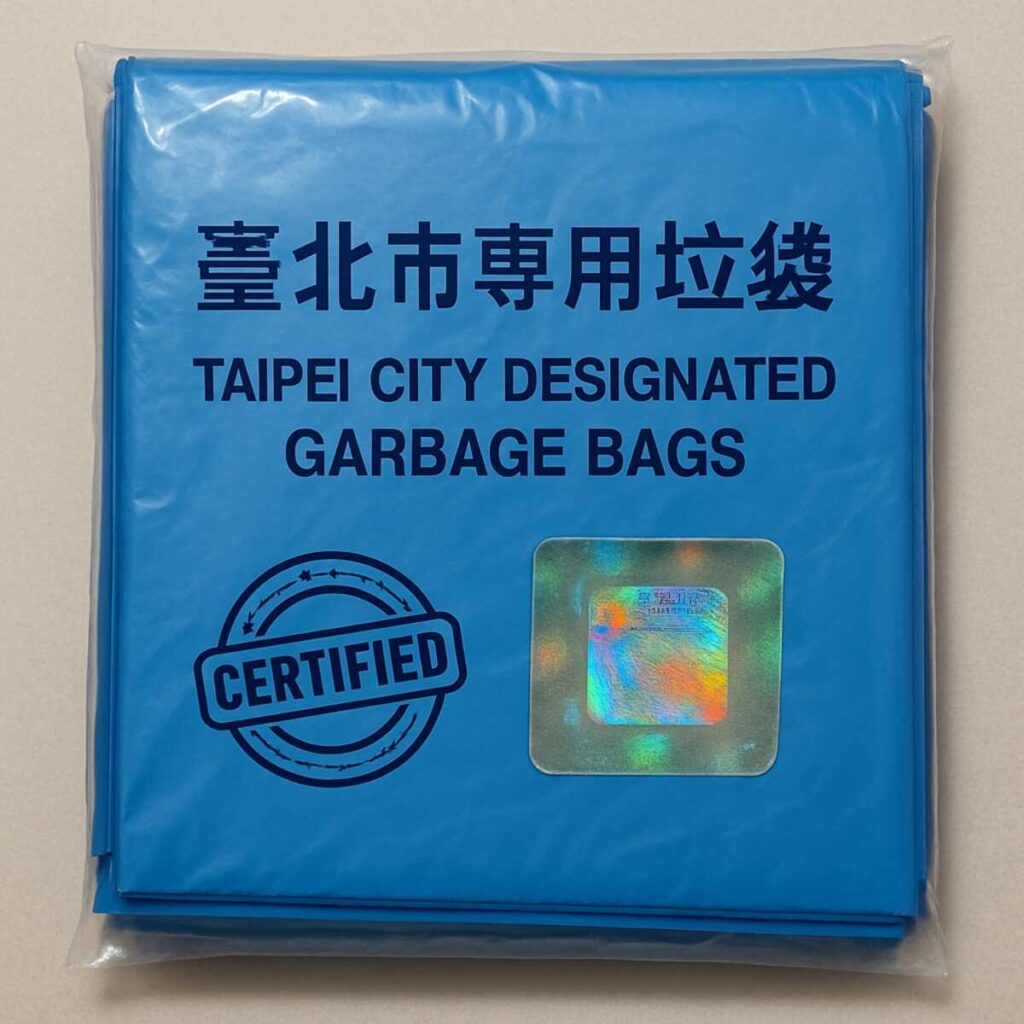
Imagine trying to throw away a simple tissue, only to realize the supermarket bag you used could earn you a hefty fine. In Taipei and New Taipei City, general waste—the unrecyclable “stuff that burns”—must be disposed of using specific, government-issued bags. This is the heart of Taiwan’s pay-as-you-throw trash collection system. Instead of a flat monthly fee hidden in a utility bill, waste disposal acts as a visible, pre-paid tax. The fundamental difference between government trash bags versus regular plastic bags is that purchasing the official version directly funds the municipal labor, truck maintenance, and incineration costs required to process your trash.
Figuring out how to use Taipei’s official garbage bags starts with a quick trip to a local convenience store, such as 7-Eleven or FamilyMart. Simply ask the cashier for garbage bags at the counter, verifying you have the genuine article by spotting the anti-counterfeit hologram on the packaging. Taipei’s bags are a distinct light blue, while neighboring New Taipei City uses pink, and they cannot be used interchangeably across city lines. To match your household volume, they are sold in packs across several capacities:
- 3 to 5 Liters (NT$21–NT$45 per pack): Perfect for solo expats or managing small apartment bins.
- 14 Liters (NT$100 per pack): The standard choice for couples emptying their trash twice a week.
- 25 to 33 Liters (NT$175–NT$247 per pack): Best for larger families or occasional apartment deep cleans.
By making trash disposal an out-of-pocket expense, this policy creates a powerful financial motivation to sort your waste carefully. Because recycling and food compost collection are completely free, taking a few extra seconds to rinse out a plastic bento box suddenly feels less like a chore and more like a smart way to save money. Once your blue bag is securely tied, the next step is timing your hand-off correctly.
Decoding the Nightly Ritual: Yellow Trucks, White Trucks, and the App
Your newly purchased blue bag is only half the equation; the rest depends on timing and knowing your colors. As the familiar sounds of Für Elise or A Maiden’s Prayer drift down the street, you will notice a highly choreographed street ballet involving two distinct types of vehicles. The iconic yellow truck is the star of the show, designed exclusively to collect your general waste and the separate buckets of raw or cooked food scraps. Trailing closely behind is usually a smaller white truck that serves as a mobile sorting facility for paper, plastic, glass, and metal. Familiarizing yourself with the yellow garbage truck’s music schedule and this specific vehicle pairing ensures you never accidentally toss your carefully rinsed bento box into the incinerator pile.
Modern urban technology has thankfully eliminated the need to stand on a wet sidewalk during a sudden Taipei downpour. Most municipalities offer free smartphone applications, such as the local government’s official garbage truck tracker, that function almost exactly like popular ride-sharing apps. By simply opening the app on your phone, you can watch a tiny vehicle icon inch its way down the surrounding avenues in real-time, allowing you to stay comfortably indoors until the truck actually turns onto your block. This digital tool transforms waste sorting in Taiwan from an anxious guessing game into a predictable, stress-free routine, especially for newcomers who are still adjusting to the neighborhood rhythm.
Eventually, this evening routine becomes an effortless part of your daily life, shifting a solitary chore into a lively community gathering. You will frequently see residents chatting, walking their dogs, or catching up on local news while they wait for the sanitation workers to wave them forward. Organizing your materials confidently before the music begins ensures a smooth hand-off.
The Three-Bin Rule: A Beginner’s Map to Sorting Success
Stepping up to the neighborhood garbage truck with an unsorted bag is a quick recipe for minor social embarrassment. To master waste sorting in Taiwan without the anxiety of memorizing a chemistry textbook, apply the “Destination Method.” Instead of overthinking the specific materials, simply ask yourself where the item is going next. Every piece of trash in your home is ultimately destined for one of three places: the incinerator, a recycling factory, or a local farm. Viewing Taiwan’s mandatory garbage separation rules through this practical lens transforms a potentially daunting chore into a highly logical daily routine.
To put this logic into practice, imagine finishing a typical takeout meal from a nearby night market or convenience store. Taiwan’s EPA recycling categories require that recoverable materials be relatively clean before reaching sanitation workers, while everything else must be properly separated. Keep this quick-reference guide handy for categorizing common household items:
- General Waste (The Incinerator): Used tissues, heavily greased paper wrappers, and thin plastic films like candy wrappers. These belong in your city-mandated, prepaid trash bag.
- Recyclables (The Factory): Rinsed bubble tea cups, clean paper lunchboxes, glass bottles, and metal cans. These are handed over to the white truck to become new products.
- Food Waste (The Farm): Leftover noodles, fruit peels, and vegetable trimmings. These are dumped directly into the specialized buckets hanging off the yellow truck.
Mastering this curbside hand-off requires just a few extra seconds of rinsing and separating in your kitchen before the music even starts. If you ever freeze up while holding a confusing, multi-material item at the truck, simply ask the sanitation volunteer standing nearby—they are there to guide willing beginners, not judge them. Properly disposing of dinner scraps is the final hurdle, relying on a vital distinction between raw and cooked food.
Raw vs. Cooked Food Waste: Why the Pigs Care What You Eat
Approaching the back of the yellow garbage truck, you will usually notice not one, but two distinct barrels hanging from the tailgate waiting for your kitchen scraps. Tossing your leftover night market dinner into these buckets might seem straightforward, but understanding the crucial distinction between raw and cooked food waste is one of the most fascinating quirks of Taiwan’s waste management. Instead of treating all organic matter equally, the system splits food scraps based on their final, highly specific destinations.
The first barrel acts as a nightly community catering service for the island’s livestock. This “cooked” food bin is destined for local pig farms, meaning its contents must be entirely safe for animals to chew and digest. Leftover braised pork rice, soft noodles, expired bread, and cooked vegetables are all perfect additions. However, residents must meticulously exclude hard items that could cause severe illness in animals or internal damage; consequently, clam shells from a seafood stir-fry, hard mango pits, and sharp bones must never end up in this particular bucket.
Any organic scrap that fails this practical “pig test” finds a productive second life in the adjacent barrel. The “raw” waste category absorbs all the tough, fibrous, or uncooked remnants of your daily meal prep, such as thick fruit peels, coffee grounds, eggshells, and discarded vegetable stems. Rather than being eaten by livestock, these materials are shipped to specialized facilities for large-scale microbial composting. Through this accelerated natural breakdown process, the tough raw scraps are eventually transformed into nutrient-rich soil fertilizer, showcasing how deeply integrated local agriculture is with everyday recycling in Taiwan.
Separating your dinner remnants might feel oddly specific for a newcomer, but taking a few extra seconds at the kitchen sink to properly separate your scraps helps you actively support local farms rather than unnecessarily burdening a fiery city incinerator. With the food containers empty, attention turns to the dry, manufactured materials awaiting recycling.
Mastering the Blue Bin: What Actually Counts as a Recyclable?
Standing before the recycling truck, the first rule of resource recovery becomes immediately apparent: your empty containers shouldn’t smell like your last meal. Participating successfully in recycling in Taiwan means treating discarded items not as garbage but as valuable raw materials awaiting their next life. Before anything reaches the community sorting bins, residents must diligently perform contaminant cleaning. A quick splash of water at the kitchen sink ensures that sticky soy sauce residue or sweet bubble tea droplets don’t attract pests or ruin a batch of perfectly good plastics. This simple act of washing your waste is the foundational habit that keeps the island’s circular economy running efficiently.
Once your items are rinsed, you might wonder exactly which items belong in the blue recycling bin or the truck’s hand-sorted compartments. The national system categorizes everyday household goods into specific streams to maximize their reuse value. Under Taiwan’s EPA recycling categories, you will consistently encounter four major high-value groups:
- PET bottles: Clear plastic water or tea containers, which require removing the cap and peeling off the outer plastic label before crushing.
- Aluminum cans: Soda and beer cans, which are infinitely recyclable when crushed flat to save space.
- Glass: Sorted carefully by color (brown, green, or clear) and handed over without breaking.
- Cardboard: Clean shipping boxes and unsoiled packaging paper, usually flattened and tied into neat bundles.
Taking apart a standard beverage bottle into three distinct pieces—cap, label, and body—illustrates the meticulous, hands-on nature of sorting resource recovery materials. While separating pure plastics or crushing aluminum cans feels highly intuitive, the neighborhood collection routine gets famously tricky when modern convenience packaging blends different materials together. The most frequent stumbling block for well-meaning newcomers happens right after finishing a takeaway lunch or a morning latte, when they instinctively try to toss their empty drink holder into the standard cardboard bundle. Understanding why throwing a coffee cup in the paper pile is a sorting mistake introduces the paper cup paradox.
The Paper Cup Paradox: Why Your Coffee Cup Isn’t Just Paper
You just finished your morning latte and instinctively head toward the cardboard pile, but wait. If you are wondering whether paper coffee cups are recyclable in Taiwan, the answer is yes, but not with regular paper. These convenient containers, much like your favorite takeout bento boxes, harbor a hidden secret to prevent leaks: a thin, waterproof layer of plastic bonded inside. Because standard paper mills cannot process this mixed material, tossing them in with old newspapers ruins a perfectly good batch of paper pulp. Instead, Taiwan directs these plastic-lined containers to specialized facilities that strip the plastic film from the paper fibers, meaning you must place them in a specific “paper container” stream rather than the general paper bundle.
Mastering recycling in Taiwan often comes down to deconstructing your daily treats into their basic elements before they leave your hands. Take the iconic bubble tea, which serves as a perfect multi-material puzzle. The plastic straw belongs in general waste because it is too small to be recovered, while the hard plastic lid goes into the plastics bin. Once rinsed, the cup is placed in its category based on whether it is pure plastic or plastic-lined paper. This hands-on disassembly directly ensures that materials get a second life rather than burning in an incinerator.
Navigating these nuances quickly becomes muscle memory, turning a confusing chore into a daily point of pride. You will notice locals effortlessly separate their lunch remnants at public sorting stations, treating the process as a routine social ritual rather than a science test. If you ever feel overwhelmed by complex packaging at the nightly truck collection, simply watch your neighbors or ask the friendly volunteers standing nearby. For harder-to-categorize household items, the neighborhood corner shop offers a hidden utility.
7-Eleven as Your Recycling Concierge: Batteries, Bulbs, and Electronics
Instead of chasing the music of the neighborhood garbage trucks, sometimes the easiest way to handle hazardous waste is simply walking down the block. Almost every corner in this country features a 24-hour convenience store, and these brightly lit retail hubs serve a crucial, lesser-known civic duty. For everyday recycling in Taiwan, places like 7-Eleven and FamilyMart act as mini resource recovery centers. They solve the common headache of figuring out where to safely dispose of small, potentially toxic items that absolutely cannot go in your regular trash bags or standard curbside bins.
Transforming these dangerous cast-offs into a quick snack is perhaps the most rewarding part of this entire system. Instead of paying a disposal fee, you actually earn shopping credits based on the weight or quantity of what you drop off. Simply hand your items to the cashier, and they will deduct the reward directly from your purchase of coffee, tea eggs, or other store goods. For those wondering how to dispose of batteries at 7-Eleven in Taiwan alongside other e-waste, here are the approximate trade-in values:
- Used dry cell batteries: 0.5 kg yields roughly 8 NTD in store credit.
- Discarded laptops: Around 120 NTD per device.
- Old mobile phones: About 12 NTD each.
- Broken tablets: Approximately 40 NTD per unit.
Keeping heavy metals out of the soil ensures the island remains green for future generations. This 24/7 decentralized network effectively acts as an accessible household appliance recycling service that Taiwan’s residents can rely on at any hour. It guarantees that the lithium in dead smartphones or the mercury in old lightbulbs reaches specialized processing facilities rather than a local incinerator. Handling massive items like a broken refrigerator or an old sofa requires a completely different approach.
Large Item Disposal: What to Do with the Old Sofa
Realising that those yellow musical trucks only accept bags small enough to toss by hand is your first step toward mastering bulk refuse. If you are replacing a mattress or a broken dining table, you might be tempted to simply drag it to the nearest street corner under the cover of darkness. However, strict local “No Curbside Abandonment” policies make this a highly costly mistake. Leaving unannounced bulk items on the sidewalk violates deep-seated neighborhood etiquette and will quickly trigger a steep penalty for improper waste disposal in Taiwan, often aided by hidden street cameras or vigilant neighbors. The island’s densely populated streets remain spotless precisely because massive household items must have an assigned destination before they ever leave your front door.
Fortunately, the official resolution to this problem is surprisingly accommodating and usually entirely free. Instead of hiring a private junk removal company, residents must coordinate with their municipal district office to schedule a pickup with the local Cleanliness Squad. For expatriates or new arrivals wondering where to dispose of old furniture in Taipei or other major cities, the protocol is simple: call the city’s 1999 hotline or make a quick request through the local sanitation app. After detailing the size and number of items, a dispatcher will assign you a specific date, time, and loading zone. This appointment-based approach is a logical pillar of Taiwan’s waste management, ensuring that pedestrian walkways remain clear and that heavy-duty vehicles are deployed only when necessary.
Following your assigned schedule requires precise timing, as you may move your heavy items to the designated curb only shortly before the squad arrives. Once the specialized flatbed truck hauls away your old sofa, that piece of furniture does not just vanish into a massive landfill. These bulky items are transported to specialized dismantling facilities where valuable springs, foam, and wood are meticulously separated to re-enter the manufacturing supply chain. This relentless drive to extract reusable materials is powered by a national strategy known as the “Four-in-One” Program.
The ‘Four-in-One’ Program: The Economic Engine of Taiwan’s Success
You might wonder why Taiwan’s streets feature such a highly coordinated fleet of recycling trucks, or how the island affords to process millions of tons of separated materials. The secret behind this efficiency isn’t just civic pride; it is a meticulously designed economic engine known as the Four-in-One Resource Recovery Program. Enacted in 1997, this strategy united four distinct groups—community residents, local municipal collectors, private recycling enterprises, and the government—into a single, highly efficient loop. By requiring everyone to play a specific, integrated role, modern Taiwan waste management shifted from merely hiding garbage in landfills to treating it as a highly valuable commodity.
At the heart of this collaboration lies the Recycling Management Fund, an ingenious financial model that holds manufacturers accountable for the lifecycles of their products. This concept, known globally as Extended Producer Responsibility (EPR), means that the companies producing your plastic bubble tea cups or glass beer bottles must pay a fee upfront to the government. These collected fees subsidize the entire recycling infrastructure, ensuring that the materials you carefully sort into aren’t just dumped together later. Instead, the money pays for the specialized sorting facilities and transport networks required to actually process those materials back into raw resources.
This financial safety net also explains a common, yet sometimes confusing, sight in Taiwanese neighborhoods: elderly residents pushing carts stacked high with cardboard boxes or flattened cans. Because the government fund guarantees a subsidized purchase price for recovered materials, private recycling enterprises can reliably pay independent scavengers for their gathered hauls. These informal collectors act as a highly effective, decentralized cleanup crew, scooping up valuable recyclables before they ever reach the official municipal trucks and turning what would be litter into guaranteed income.
Transforming an entire island’s waste stream into a profitable, globally recognized circular economy is undeniably impressive, but it relies entirely on the compliance of every individual household. The system collapses if residents throw contaminated food waste into the paper bin or refuse to use the designated trash bags. Because personal sorting habits directly impact this national economic engine, local authorities take non-compliance seriously.
Avoiding the Fine: Legal Realities and Neighborhood Etiquette
It might be tempting to quietly leave a bag of trash on the curb when you miss the evening collection, but doing so is a major cultural and legal taboo. Taiwan’s strict “No Dirt on the Ground” policy mandates that waste must go directly from your hands into the truck. To enforce this, the government relies on the Waste Disposal Act, utilizing CCTV cameras and random spot checks by local environmental bureaus. Because waste sorting in Taiwan is tied directly to the nation’s recycling economy, local authorities actively monitor neighborhoods to protect the system’s integrity.
Getting caught breaking these rules results in much more than a polite warning; it carries real financial weight. Depending on the severity of the offense, a penalty for improper waste disposal in Taiwan can range from a mild nuisance to a major expense:
- Improper Bag Usage: Tossing general refuse into standard, uncertified grocery bags usually triggers fines ranging from NT$1,200 to NT$6,000.
- Failure to Sort: Ignoring Taiwan’s mandatory garbage-separation rules by hiding recyclables or leftover food in your general waste risks an NT$1,200 penalty.
- Illegal Dumping: Leaving household garbage on the street or cramming it into public litter bins can result in maximum fines and intense community disapproval.
Beyond the law, participating correctly in the nightly pickup is your fastest ticket to neighborhood acceptance. The garbage truck line operates as a lively social hub where elderly volunteers often stand by to kindly guide newcomers. Handing over a properly rinsed bubble tea cup or perfectly separated bento box earns immediate local respect, while trying to sneak unsorted trash past your neighbors invites swift community gossip. As these daily social rituals become second nature, the iconic city-mandated bags are also evolving alongside new environmental innovations.
The Future of the Bag: Biodegradable Plastics and New Regulations
Standing in a local supermarket, you might reach for a product wrapped in what appears to be standard packaging, only to notice a bright green “100% Biodegradable” label. While this may sound like an immediate win for the environment, these materials pose a unique challenge within Taiwan’s waste management system. Many consumers naturally assume these eco-friendly containers belong in the recycling truck. However, the reality of processing these specific materials has prompted a major shift in how the island handles modern packaging, directly impacting your daily purchasing and sorting habits.
The core of this confusion lies with Polylactic Acid (PLA), a common bioplastic often used for cold drink cups and supermarket fruit trays. Because PLA requires specific industrial composting conditions to break down, it cannot be melted with traditional plastics under Taiwan EPA’s standard recycling categories. If a PLA container mixes with standard PET bottles, it contaminates the entire batch. To protect the recycling stream, current biodegradable plastic bag regulations in Taiwan strictly require that you place PLA items in your paid general waste bag for incineration. Recognizing this hurdle, authorities recently banned single-use PLA cups entirely to eliminate the friction.
Beyond just targeting confusing bioplastics, this decisive policy reflects a broader national phase-out of single-use items altogether. From convenience stores to bustling night markets, you will notice vendors replacing plastic straws with paper alternatives and offering discounts when you bring your own reusable cup. Making informed choices at the checkout counter aligns with local laws and prepares new arrivals to join the neighborhood line.
Your Daily Miracle: An Action Plan for New Arrivals
The strict rules of Taiwan’s waste management might initially feel like an intimidating chemistry test, but waste sorting is actually a logical, community-driven routine. You know exactly how to guide an empty bubble tea cup from your kitchen counter to the correct destination. By grasping the “polluter pays” concept and mastering the three main categories—general waste, recyclables, and food waste—you are no longer a confused observer; you are fully equipped to join your neighborhood’s nightly civic ritual.
To guarantee a stress-free first experience when the familiar melody of the garbage truck approaches, follow this simple checklist:
- Prep your bags: Place general waste in your city’s required certified bag and quickly rinse all recyclable containers.
- Separate the food: Keep raw compost separate from cooked “pig food” using reusable household bins.
- Track the trucks: Download the local sanitation app or check city websites to pinpoint your neighborhood’s exact collection schedule.
- Head outside early: Step out a few minutes before the music arrives to watch how your neighbors line up and prepare.
- Ask for help: When in doubt, politely show your item to the volunteers standing by the trucks—they are always willing to guide you.
Mastering recycling in Taiwan is one of the most rewarding milestones for any new resident. Start your first week by focusing on getting your recyclables into the correct truck, and notice how quickly the sorting habit builds your confidence. Each time you properly separate your household items, you actively sustain a national environmental success story that transformed “Garbage Island” into a global model. You aren’t just taking out the trash—you are proudly protecting your new home.