


Hey there! Ever wondered why those masks from Squid Game became such a sensation? Not only are they a hit for Halloween costumes, but they also carry a rich symbolism that adds depth to the series. Let’s dive into the fascinating world of these iconic masks and explore what they really mean. Whether you’re an aspiring novelist, a content marketer, or a graduate student, understanding symbolism can add layers to your writing and storytelling. To learn more, check out purrshare.com
Unmasking the Symbols
The Masks: More Than Just a Costume
At first glance, the masks in Squid Game might just seem like a cool accessory for a Halloween costume. But these masks are more than mere disguises; they’re powerful symbols that reflect themes of anonymity, control, and dehumanization. The masks serve as a visual metaphor for the loss of personal identity amidst the chaos of the games, highlighting the stark reality that the players face.
The players in the game are stripped of their identities, represented by the uniform masks they wear. This anonymity underscores the loss of individuality and the dehumanizing nature of the games. It’s a stark reminder of how people can become mere numbers in a system that values power over human life. The masks act as a barrier, both physically and metaphorically, between the players and their humanity, forcing them to confront their own dehumanization.
Moreover, the masks serve as a social equalizer within the context of the games. By covering their faces, the players are rendered indistinguishable from one another, leveling the playing field in a brutal contest where personal attributes mean nothing. This loss of identity is a poignant reflection on societal structures that often prioritize conformity over individuality.
The Circle, Triangle, and Square
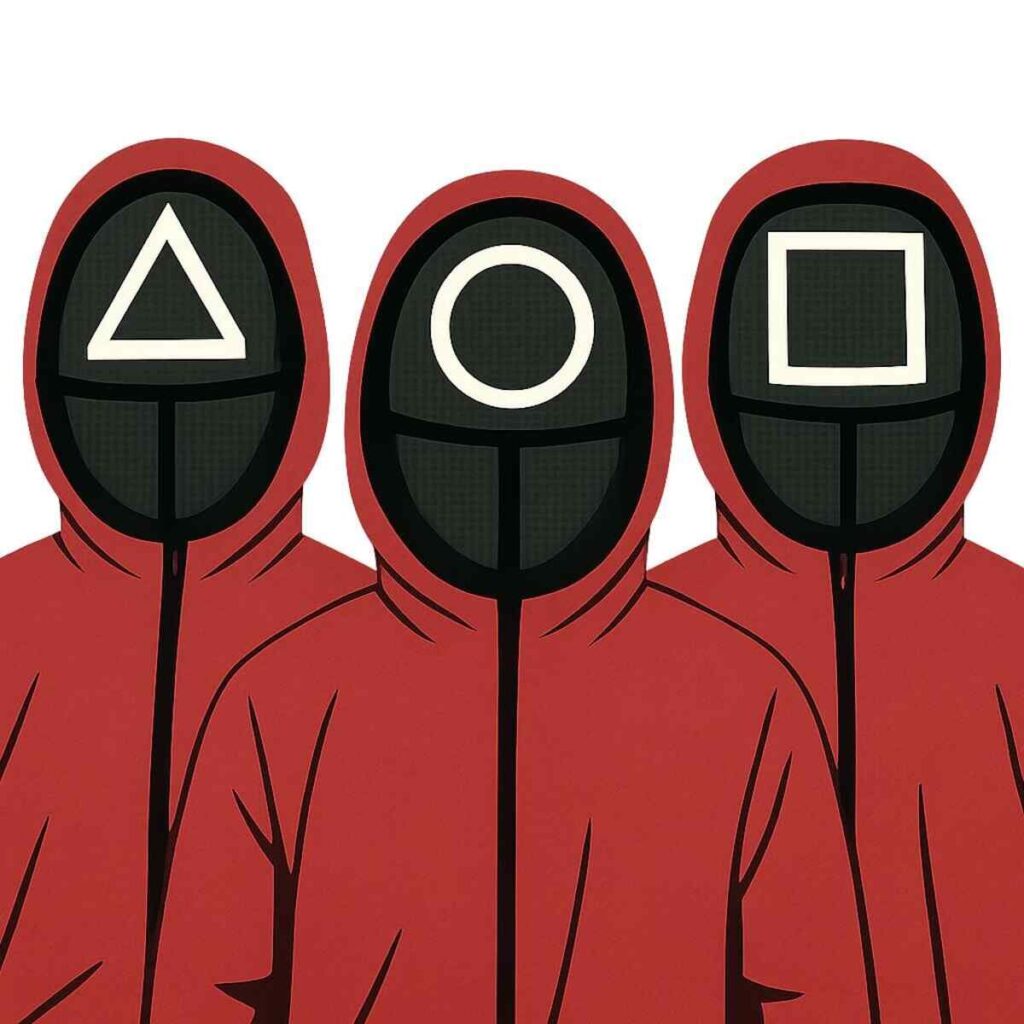
The guards in Squid Game wear masks with simple geometric shapes: circles, triangles, and squares. But what do these shapes signify? Each shape represents a distinct role within the hierarchy of the guards, creating a visual language that communicates authority and function without words.
- Circle: The circle represents the lowest rank in the hierarchy, symbolizing the mundane, repetitive tasks these guards perform. It’s a shape of continuity and monotony, echoing their unending cycle of duties. The circular masks highlight the insignificance and replaceability of these guards, illustrating their roles as cogs in a larger machine.
- Triangle: The triangle, with its sharp points and angles, signifies authority and power. Guards with triangle masks are tasked with enforcing rules and maintaining order, reflecting the strength and vigilance associated with this shape. The triangle’s pointed edges suggest a readiness to act and a capacity for aggression, necessary traits for those charged with maintaining discipline.
- Square: The square is a symbol of stability and structure, worn by the supervisors who oversee the operations. It represents the organization and control required to manage the chaos of the games. The square’s even sides and right angles convey a sense of fairness and balance, qualities essential for those in leadership positions.
Furthermore, these shapes create a visual shorthand that instantly communicates the guard’s role and rank within the game’s hierarchy. This system of symbols eliminates the need for verbal communication, underscoring the oppressive nature of the game’s environment, where individuality is suppressed.
Why Symbolism Matters in Storytelling
Making Your Story Unforgettable
For aspiring novelists, understanding and incorporating symbolism into your writing can elevate your storytelling. Symbolism can add depth to your characters, enrich your plot, and make your story resonate with readers on a deeper level. Think of it as a secret language that speaks to the subconscious, leaving a lasting impact. By embedding symbols into your narrative, you create layers of meaning that readers can peel back, enhancing their engagement and emotional connection to the story.
Symbolism also allows for the exploration of complex themes without overt exposition. By using symbols, writers can suggest ideas and emotions that words alone might not fully capture. This subtlety invites readers to engage more deeply with the text, encouraging them to ponder the underlying messages and themes.
Additionally, symbolism can give your story a timeless quality. By tapping into universal symbols and archetypes, your narrative can resonate across different cultures and time periods, ensuring its relevance and appeal to a wide audience. This timelessness is what makes stories linger in the minds of readers long after they’ve turned the last page.
Engaging Your Audience
As a content marketer, using symbolism effectively can help you craft engaging and memorable content. It allows you to convey complex ideas simply and powerfully. Whether it’s through a blog post or a marketing campaign, symbols can enhance your brand’s message and make it stick. By integrating symbols into your content, you create a shorthand that communicates your message quickly and effectively, capturing the attention of your audience.
Symbols can also evoke emotions and associations that strengthen your brand identity. By aligning your brand with certain symbols, you can create an emotional connection with your audience that goes beyond words. This emotional resonance can lead to greater brand loyalty and recognition, as consumers begin to associate your brand with the values and ideas represented by those symbols.
Furthermore, symbolism can differentiate your brand in a crowded marketplace. By using unique and creative symbols, you can set your brand apart from competitors, making it more memorable and distinctive. This differentiation can be a powerful tool in building a strong brand identity that stands out in the minds of consumers.
Simplifying Complexity
Graduate students, take note! Symbolism can be a powerful tool in academic writing, too. It helps break down complex theories into relatable concepts, making your arguments more accessible. By weaving symbols into your analysis, you can present sophisticated ideas in an understandable way. This can enhance the clarity and impact of your research, making it more compelling to your readers.
Symbols can also serve as a bridge between abstract theories and real-world applications. By using symbols to illustrate complex ideas, you can make your research more relatable and relevant to a broader audience. This can increase the reach and influence of your work, as readers are more likely to engage with content that feels accessible and applicable to their own experiences.
Moreover, symbolism can add depth and nuance to your academic writing. By employing symbols, you can convey multiple layers of meaning, enriching your analysis and interpretations. This can lead to more insightful and thought-provoking work, showcasing your ability to think critically and creatively about complex issues.
How to Use Symbolism in Your Writing
Start with Familiar Symbols
Begin by incorporating symbols that are universally recognized, like the heart for love or a storm for turmoil. Familiar symbols can provide a foundation for your readers to connect with your story or content. These symbols tap into shared cultural understandings, allowing you to communicate complex ideas quickly and effectively.
Familiar symbols also serve as entry points for your audience, offering them a way to engage with your narrative from a place of recognition and comfort. This can enhance their connection to your work, as they feel a sense of familiarity with the symbols and their meanings.
However, it’s important to use familiar symbols in fresh and creative ways. By putting your own spin on these symbols, you can avoid clichés and keep your writing engaging and original. This balance between familiarity and innovation is key to effective symbolic storytelling.
Develop Your Own Symbols
Once you’re comfortable with common symbols, try creating your own. Unique symbols can add originality to your work and surprise your audience. Think about the themes in your story or the message you want to convey, and choose symbols that align with them. This process allows you to tailor your symbols to the specific needs of your narrative, creating a more cohesive and impactful story.
Developing your own symbols also gives you the freedom to explore new ideas and themes. By crafting symbols that are unique to your story, you can delve into complex topics in a way that feels fresh and innovative. This originality can make your work stand out, capturing the attention and imagination of your readers.
Moreover, creating your own symbols allows you to build a rich and immersive narrative world. By consistently using these symbols throughout your story, you can create a sense of unity and coherence that enhances the overall impact of your work. This consistency helps readers feel more connected to your narrative, as they become familiar with the symbolic language you’ve created.
Keep It Subtle
While symbolism can enrich your writing, subtlety is key. You don’t want your symbols to overshadow the narrative. Instead, weave them naturally into your story or content, allowing readers to discover them on their own. This subtle approach encourages readers to engage more deeply with your work, as they take the time to uncover the hidden meanings and connections within your narrative.
Subtle symbolism also allows for multiple interpretations, inviting readers to bring their own perspectives and experiences to the text. This can lead to a richer and more diverse reading experience, as different readers may find different meanings in the symbols you’ve used.
Additionally, subtle symbolism can enhance the emotional impact of your writing. By allowing symbols to emerge naturally from the narrative, you create moments of revelation and insight that resonate with readers on a deeper level. This emotional resonance can make your story more memorable and meaningful, leaving a lasting impression on your audience.
Bringing It All Together
The masks in Squid Game are a brilliant example of how symbolism can enhance storytelling. They add layers of meaning to the narrative, making it more engaging and thought-provoking. By understanding and using symbolism in your writing, you can create work that captivates and resonates with your audience. Symbols can transform a simple story into a complex and compelling narrative that lingers in the minds of your readers.
Whether you’re crafting a novel, producing content, or writing an academic paper, remember that symbols are a powerful tool in your writing arsenal. Embrace them, experiment with them, and watch your writing transform into something extraordinary. By tapping into the power of symbolism, you can elevate your work, making it more impactful and memorable.
So, next time you see a Squid Game mask, remember-there’s more than meets the eye! The masks are not just a visual element; they’re a gateway to deeper understanding and insight, both within the context of the series and in the broader realm of storytelling. Use this inspiration to fuel your own creative endeavors, and let symbols guide you to new heights in your writing journey.